
Goodrich Castle the Redstone Stronghold
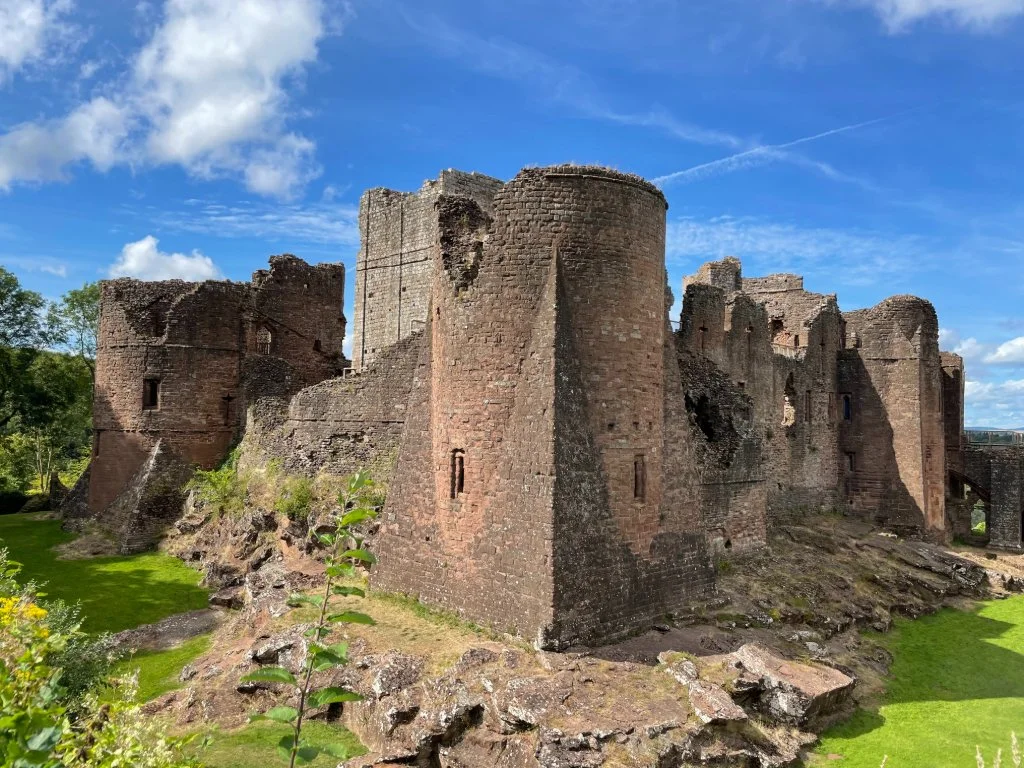
Positioned high on a rocky outcrop overlooking a strategic crossing of the River Wye, Goodrich Castle stands as one of the finest and most complete medieval ruins in England. From its humble origins as an Anglo-Saxon thane’s outpost to its evolution into a formidable Marcher stronghold and a tragic Civil War target, Goodrich has witnessed centuries of border conflict, aristocratic luxury and military innovation.
From Godric’s Outpost to Norman Stronghold
The history of Goodrich Castle begins shortly after the Norman Conquest of 1066. The Welsh Marches, the turbulent border territories between England and Wales, required constant surveillance and this specific spot commanded a vital river ford.
By 1101, an Anglo-Saxon landowner named Godric of Mappestone had established an initial timber and earthwork fortification here. While nothing of that original wooden fort survives, his legacy endures in the name: Godric’s Castle gradually became known to history as Goodrich Castle.
The Stone Keep: An Imposing Heart
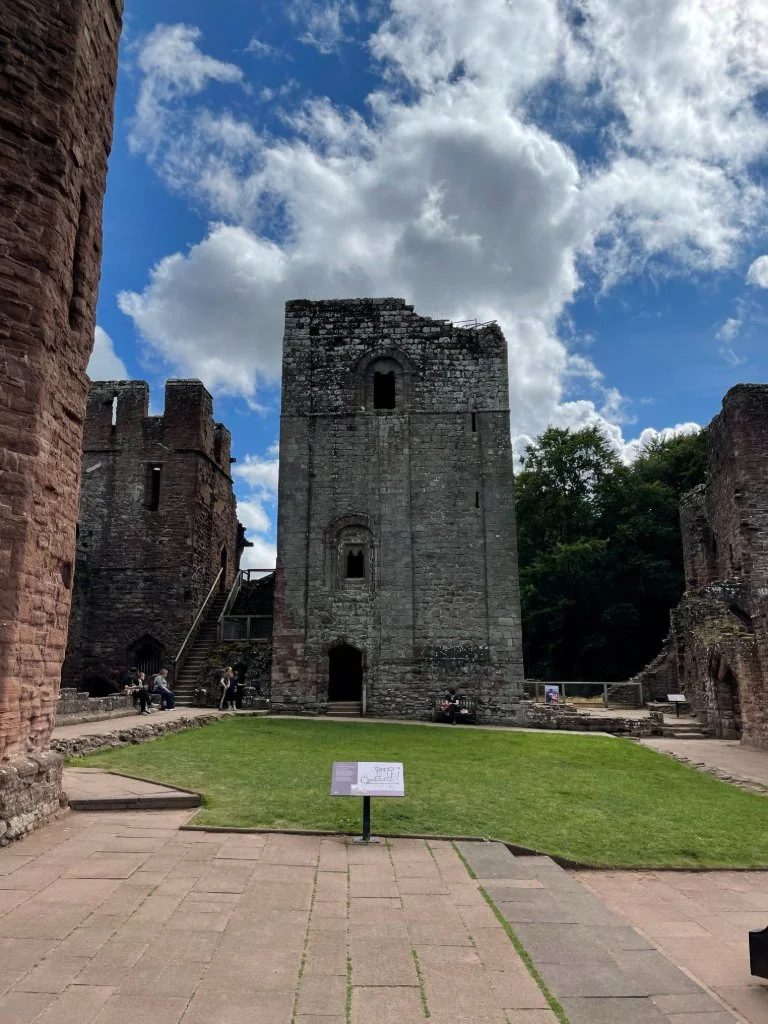
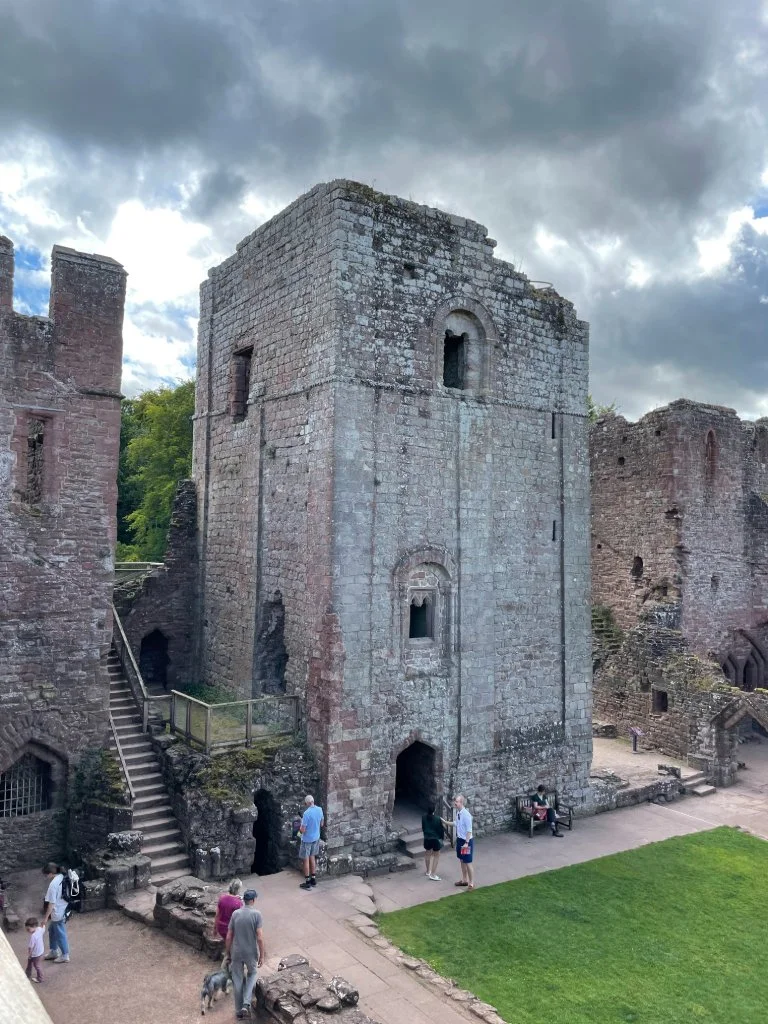
In the mid-12th century, the timber fort was dismantled to make way for a permanent stone defence. This architectural transition began with the construction of a square keep, occasionally referred to as "Macbeth's Tower."
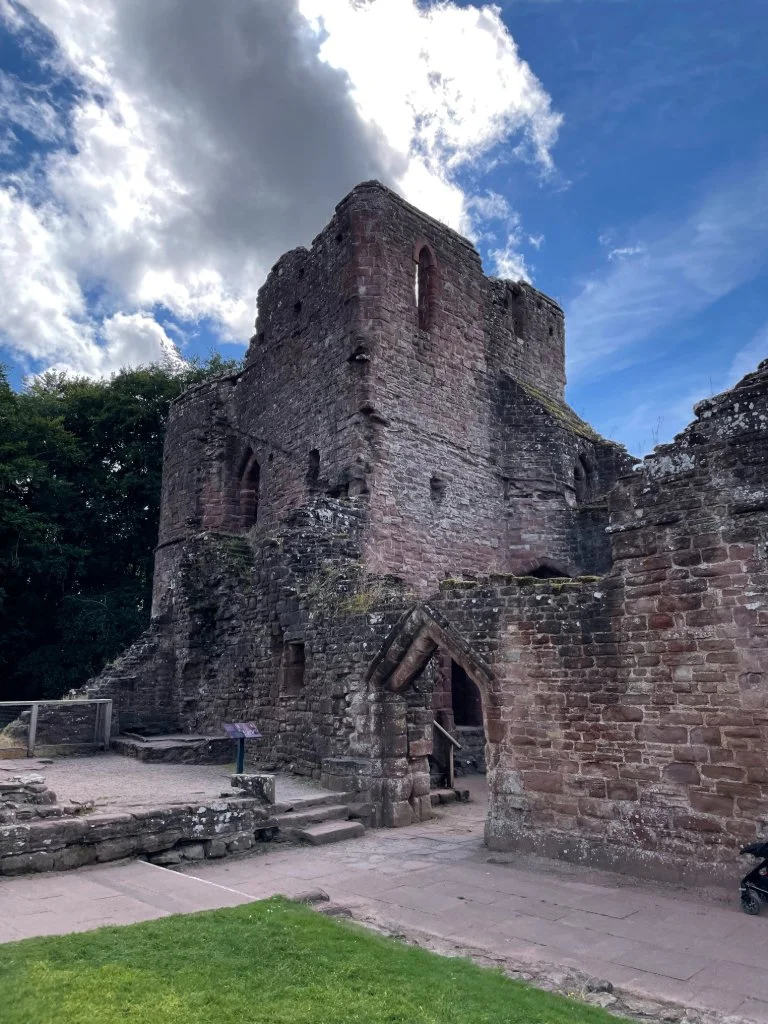
Built from light grey sandstone, likely brought upriver from the Forest of Dean, the keep stood three storeys high. It was designed primarily as a secure, imposing refuge rather than a comfortable home. Originally, its entrance was located on the first floor to prevent ground-level breaches, a feature that was later converted into an elegant window as the castle expanded around it.
The Valence Expansion: Medieval Luxury and Might
During the late 13th century, the castle came into the hands of William de Valence, the half-brother of King Henry III. Using oak trees drawn from royal forests and funding from the Crown, Valence transformed Goodrich into a state-of-the-art concentric fortress.
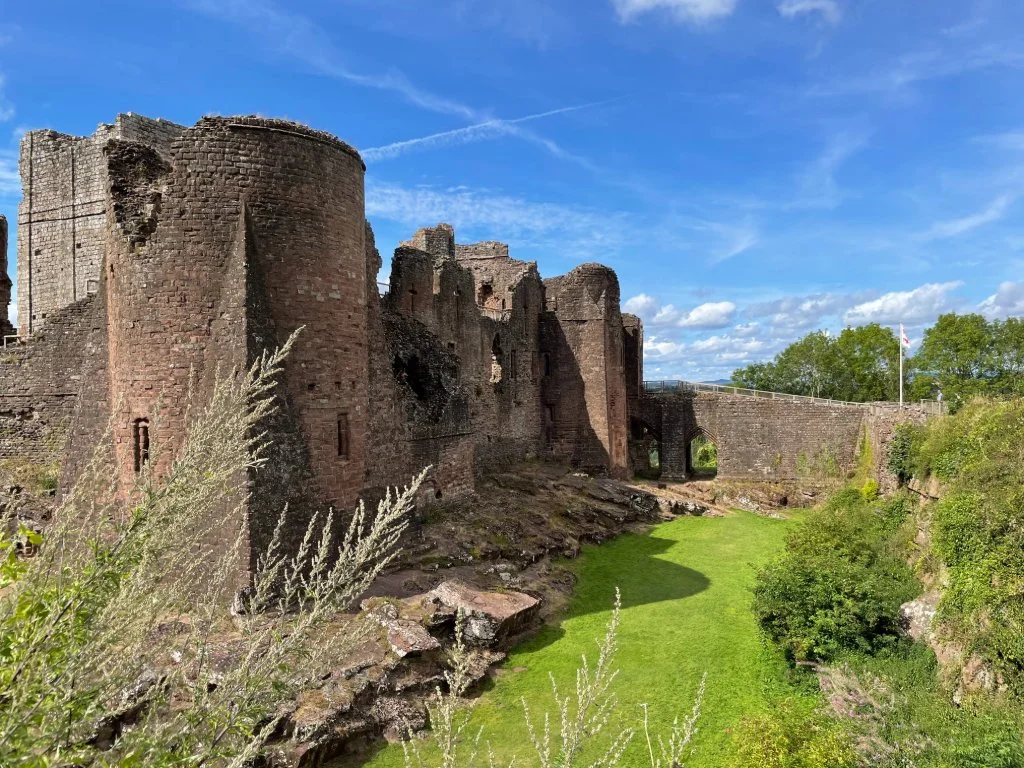
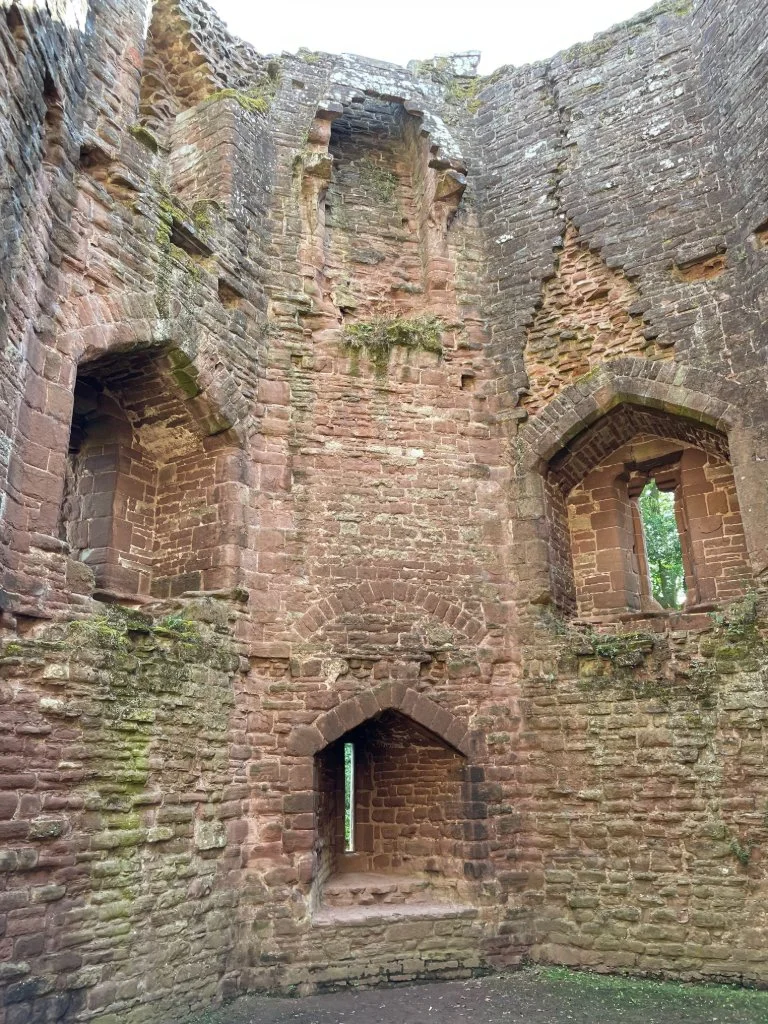
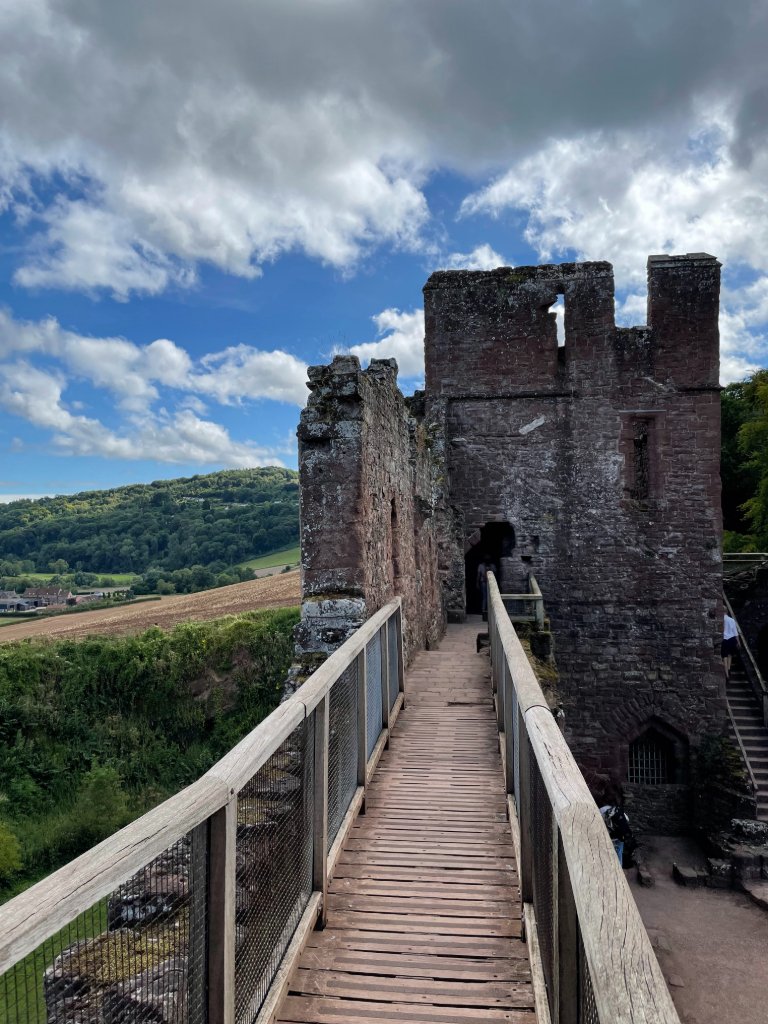
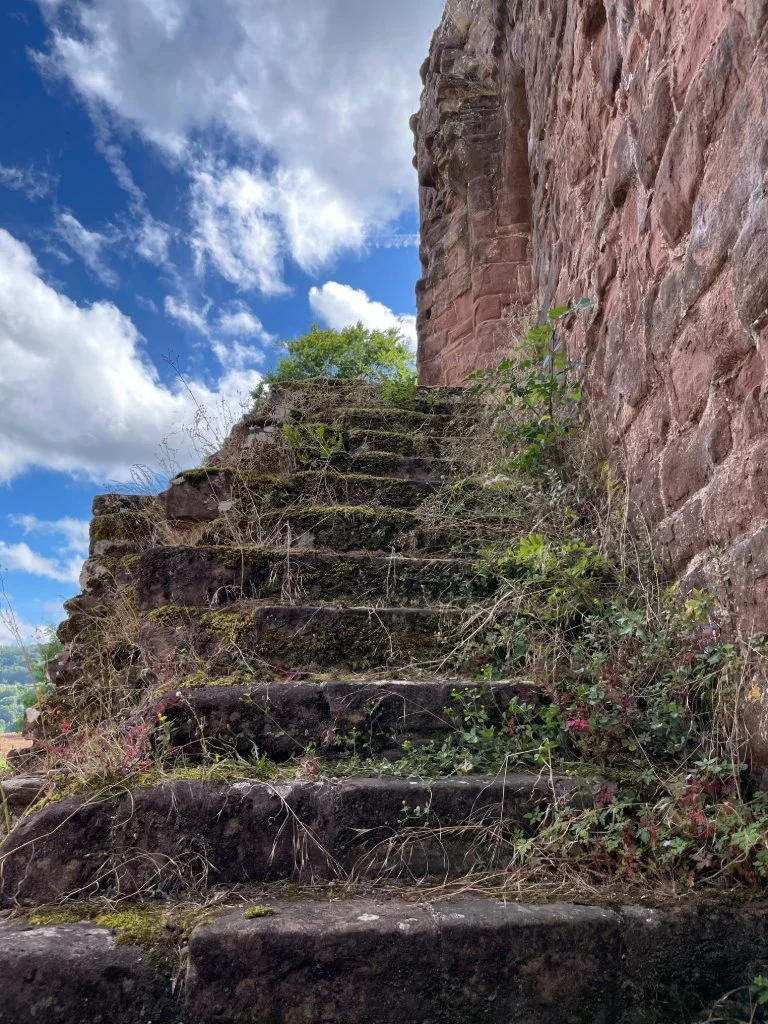
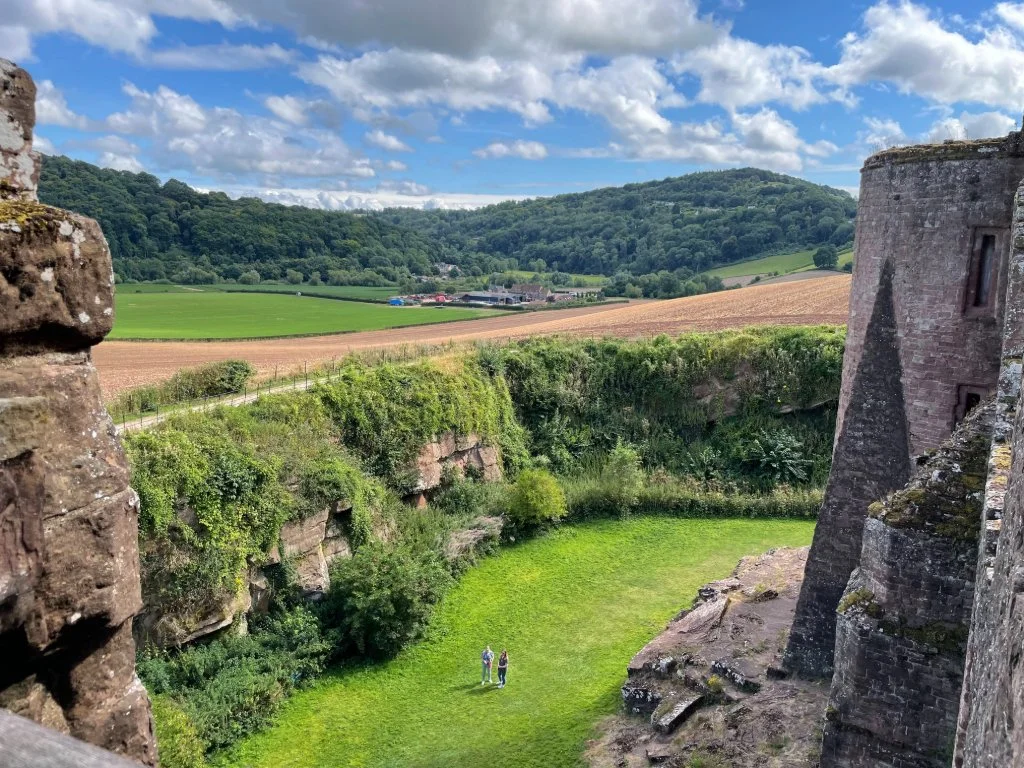
Valence built a massive, square outer curtain wall flanked by three large round towers, all constructed from the vibrant local red sandstone. These towers featured unique, pyramid-shaped structural "spurs" at their bases to prevent enemy sappers from undermining the walls.
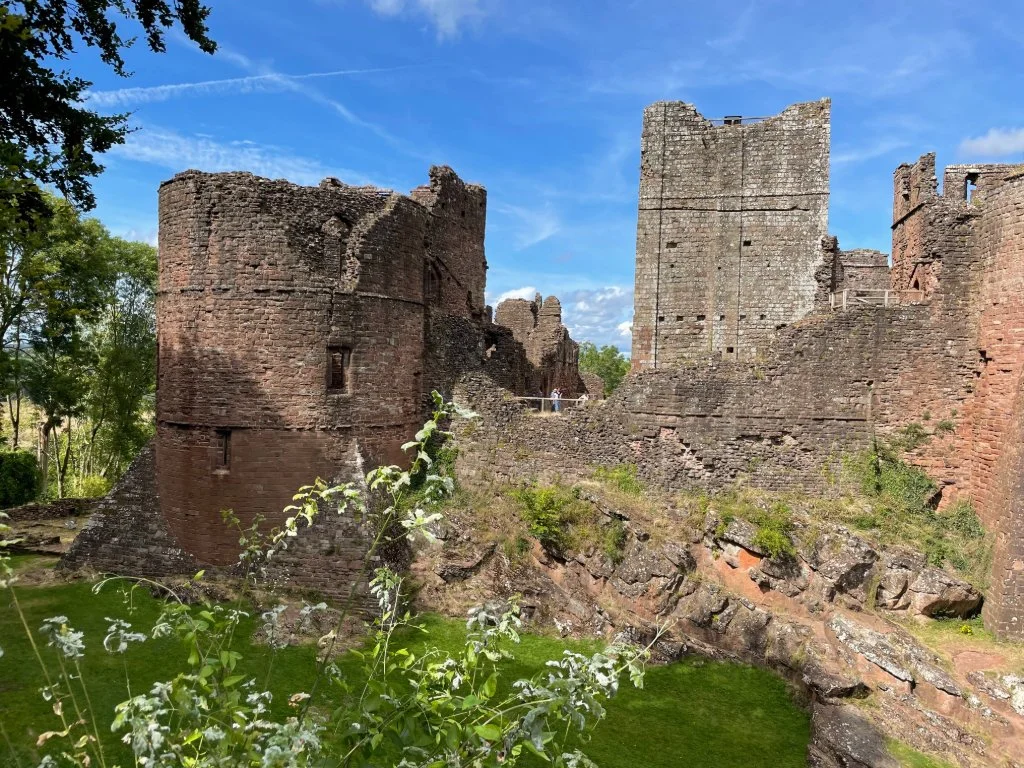
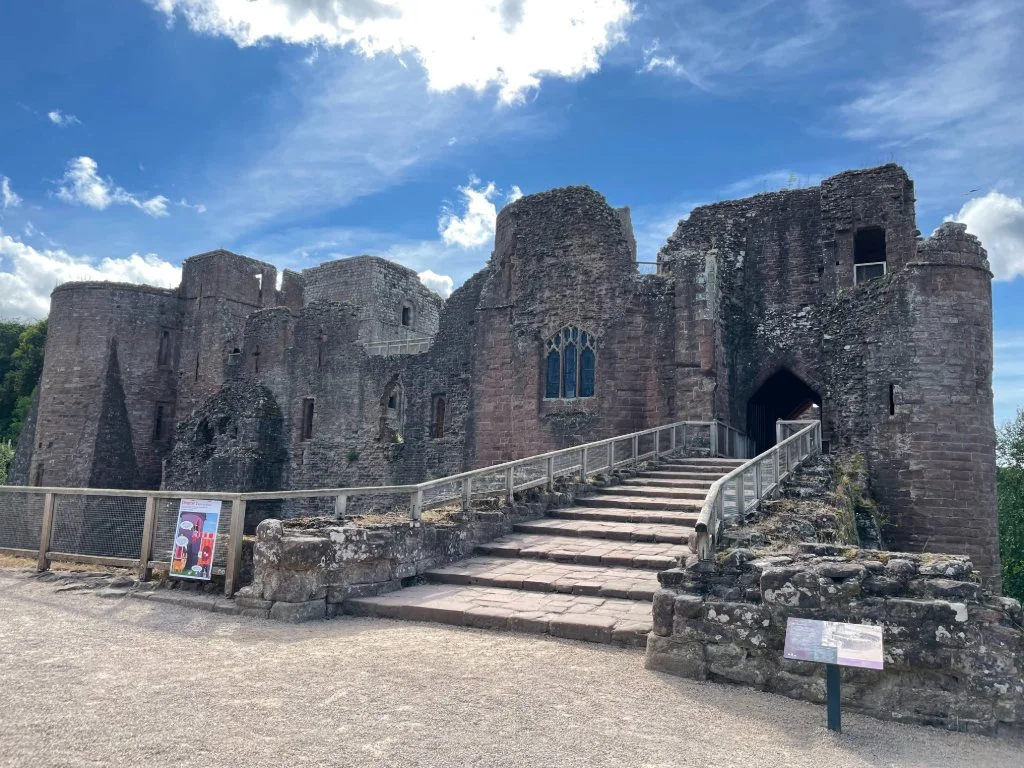
The fourth corner formed an asymmetrical, highly advanced gatehouse equipped with portcullises, murder holes and a drawbridge, all protected by an outer barbican modelled after the Tower of London.
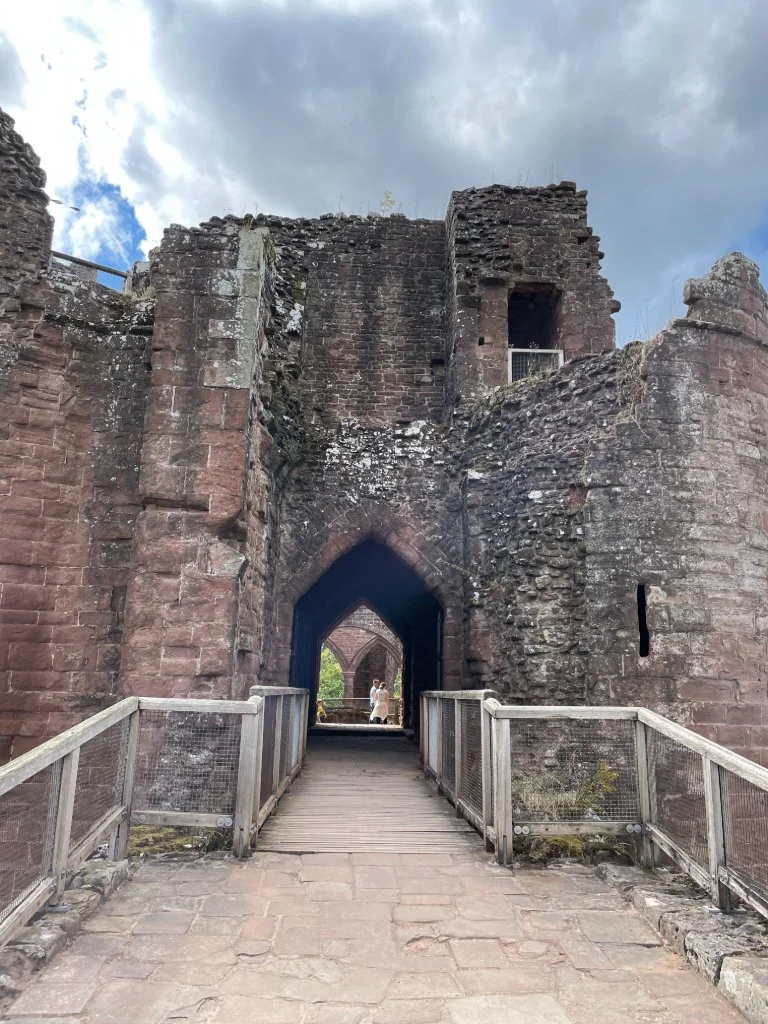
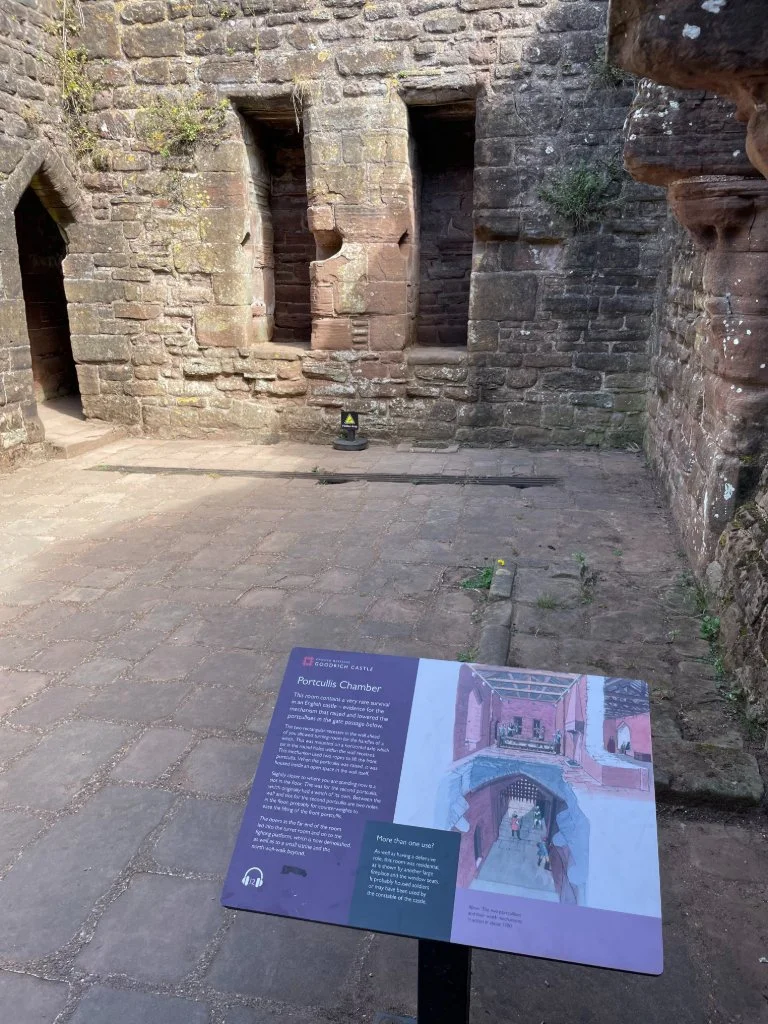
Inside these daunting walls, Valence integrated highly advanced domestic spaces that separated the servants from the nobility:
The Great Hall
A sprawling 20 by 9 metre room overlooking the River Wye, featuring massive windows and a giant fireplace.
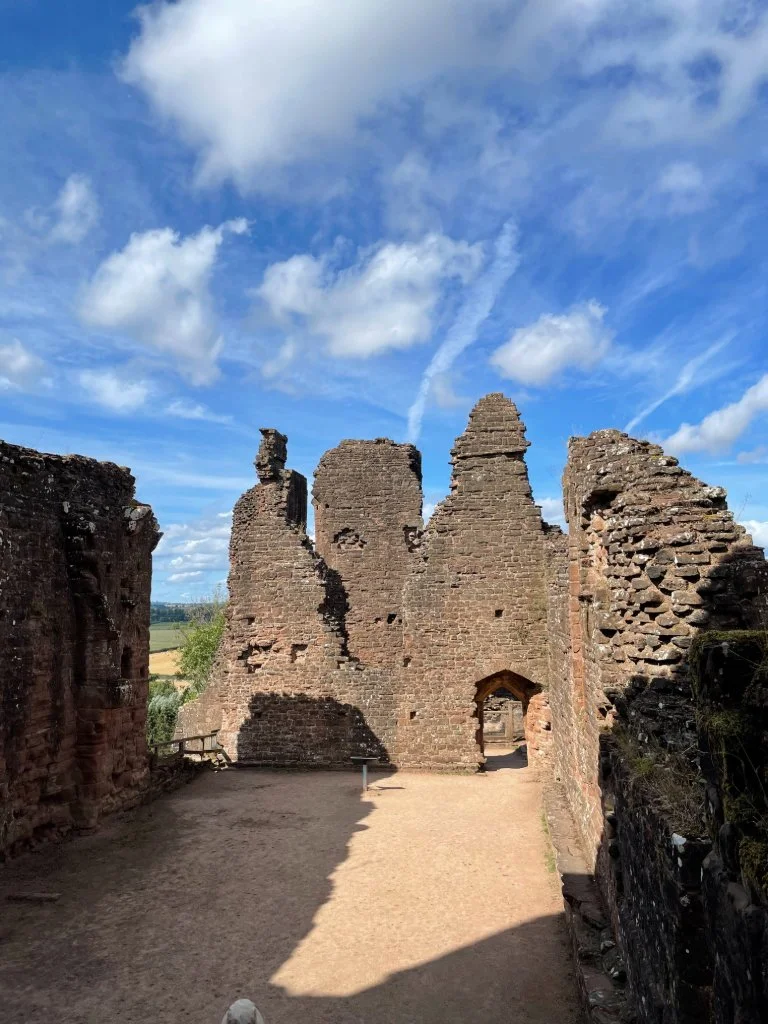
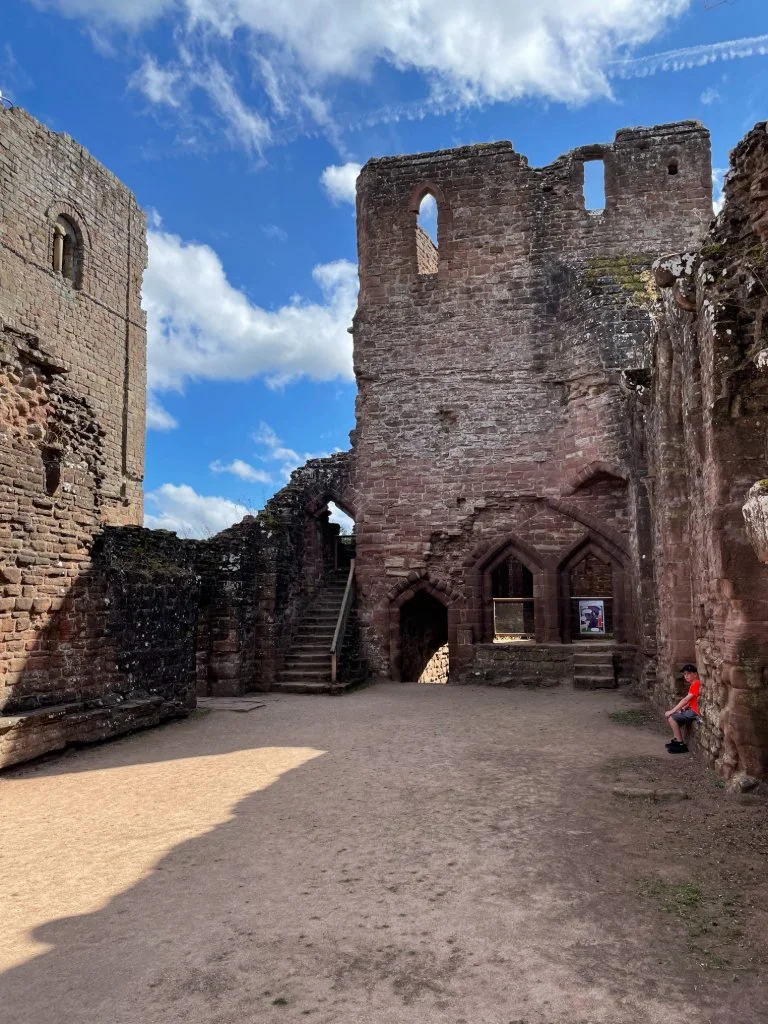
The Solar and Kitchens.
A private, sun-lit withdrawing room where the lord and lady could escape the noise and cold drafts of the Great Hall. With the kitchens nearby, equipped with twin ovens built directly into the outer wall.
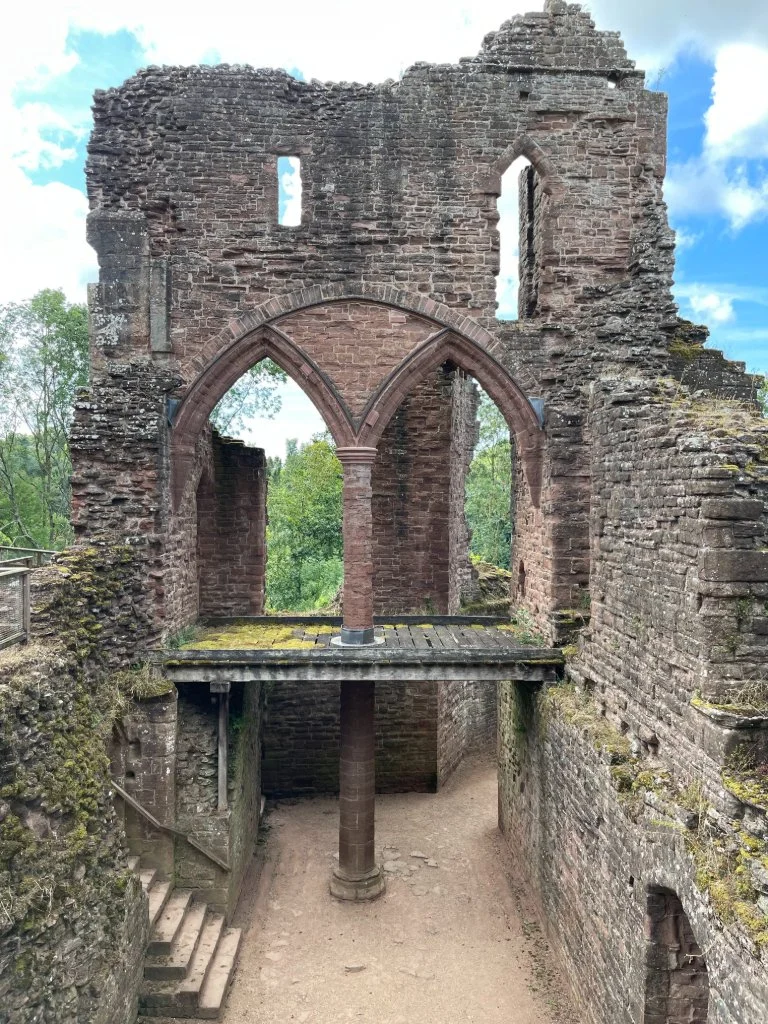
The Chapel
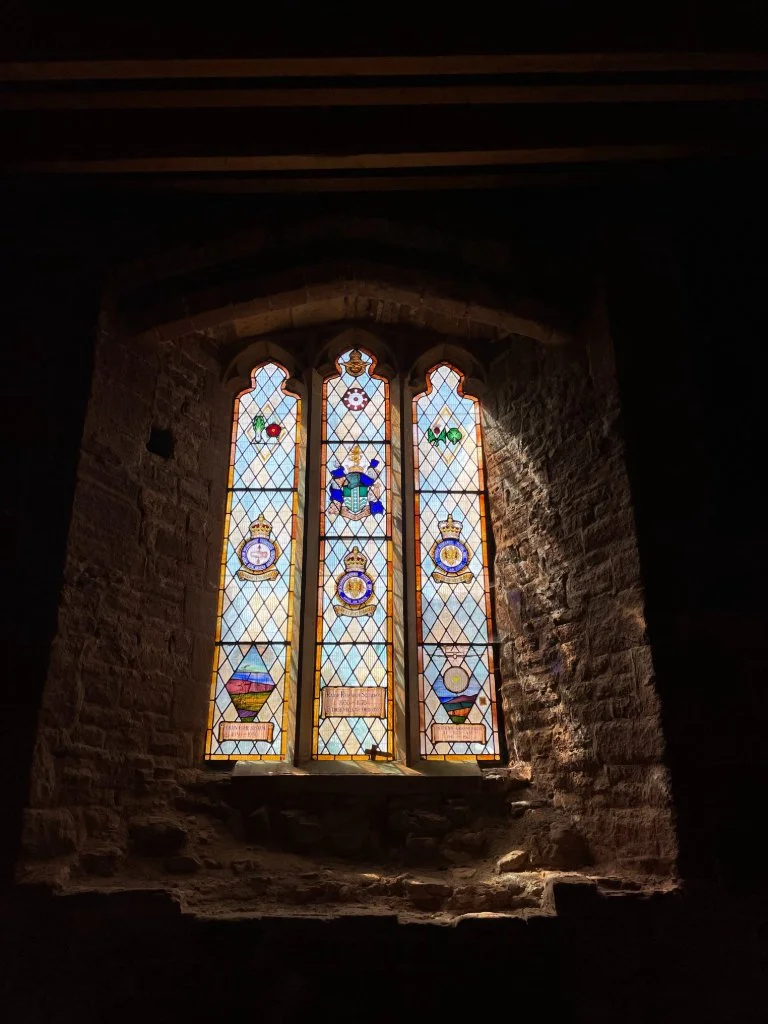
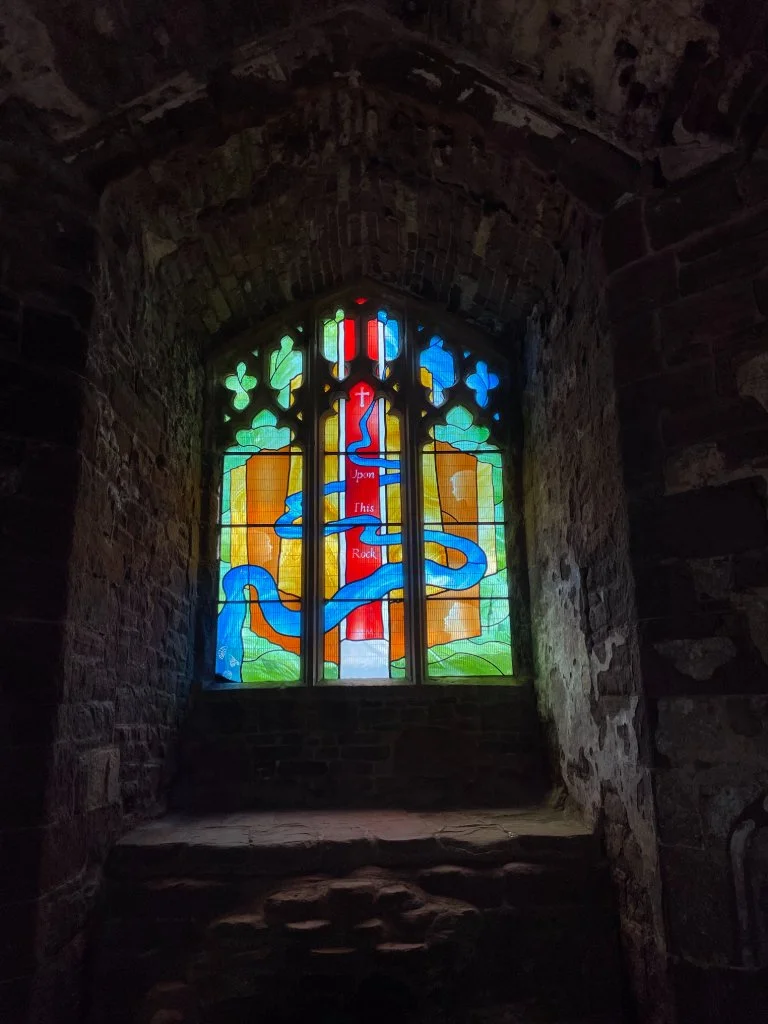
Built directly into the upper floor of the gatehouse tower due to space constraints, the castle's chapel featured a soaring, elegant window designed to flood the sacred space with natural light during daily services.
The Civil War and the Fury of "Roaring Meg"
For centuries, Goodrich enjoyed a relatively peaceful existence under the powerful Talbot family. However, its architectural strength was put to the ultimate test during the English Civil War in the 1640s.
In 1646, a staunch Royalist garrison under Sir Henry Lingen held the castle against Parliamentarian forces. The roundheads, led by Colonel John Birch, found the red sandstone walls and deep, rock-cut ditches nearly impossible to breach through traditional infantry assaults.
To break the deadlock, Colonel Birch commissioned the casting of a monstrous, short-barrelled mortar specifically for the siege. Named "Roaring Meg," this weapon was capable of firing massive, explosive 200-pound shells high over the battlements.
The mortar systematically rained destruction upon the castle's interior structures and severed its main water supply. Left with no hope of reinforcement, the Royalists surrendered. To prevent the fortress from ever being used against them again, Parliament ordered the castle to be slighted (partially demolished), leaving behind the magnificent, roofless ruins that romantic poets like William Wordsworth would later champion as the noblest ruin in Herefordshire.
The Myths and Ghosts of Goodrich Castle
Every great medieval fortress holds the folklore of the people who lived and died within its walls. The jagged, red ruins of Goodrich Castle are no exception. Over the centuries, several haunting legends have become deeply intertwined with the site, born from the desperation of the English Civil War and the centuries of aristocratic drama that preceded it.
The Ill-Fated Lovers of the Wye
The most famous and tragic legend of Goodrich stems directly from the bitter siege of 1646. As Parliamentarian forces tightly encircled the castle, the Royalist garrison knew their chances of survival were dwindling.
Among those trapped inside were Alice Birch, the niece of a prominent local Roundhead colonel and her lover, Charles Clifford, a young Royalist officer. Knowing their love would never be permitted by Alice's family, and facing a brutal surrender, the young couple resolved to make a desperate escape.
Under the cover of a fierce midnight storm, they slipped out of the castle walls and mounted Clifford's horse. They made a frantic dash toward the River Wye, hoping to cross the swelling waters to safety. However, the torrential rain had transformed the river into a raging torrent. As they plunged into the ford, the heavy current overwhelmed the horse, dragging both Alice and Charles down into the dark depths.
To this day, locals and visitors claim that when a heavy storm batters the Wye Valley, the desperate figures of two figures on horseback can be seen rushing down the rocky track from the castle gates, accompanied by the faint, chilling sound of screams echoing over the rushing river.
The Prisoner of Macbeth’s Tower
Long before the Civil War, the grey stone keep stood as a silent witness to a entirely different kind of tragedy. During the 14th century, the castle was a stronghold of the powerful Talbot family.
According to local lore, a notable Irish prisoner, sometimes called "Macbeth" (giving the tower its unusual alternative name), was held captive in the upper storeys of the keep.
Desperate to return to his homeland, the prisoner attempted a daring escape by scaling down the outside of the sheer stone walls. Halfway down the descent, he lost his grip and fell to his death onto the rocky courtyard below.
Superstition has long held that his restless spirit never left the tower. Visitors exploring the narrow, dark chambers of the 12th-century keep occasionally report an overwhelming sense of unease, while others have reported glimpsing a solitary, shadowy figure gazing out from the upper windows toward the distant horizon.
The Haunting of Colonel Birch
Even the victors of Goodrich's history could not escape its eerie legacy. Colonel John Birch, the Parliamentarian commander who deployed the devastating "Roaring Meg" mortar, is also central to the castle's folklore.
Local stories suggest that Birch was so deeply affected by the absolute destruction he unleashed upon the magnificent fortress, and perhaps haunted by the tragic loss of his own niece in the river escape, that his conscience never truly found peace. Legend says that on stormy nights, a phantom figure resembling the Puritan colonel can be seen pacing the broken ramparts, surveying the ruined walls as if forever regretting the order to tear them down.
Visiting Goodrich Castle
Goodrich Castle is run and managed by English Heritage. For details on opening times, facilities and refreshments please visit:
https://www.english-heritage.org.uk/visit/places/goodrich-castle/
Address: Castle Lane, Goodrich, Ross on Wye, Herefordshire, HR9 6HY